Project Ati Ling
Ati Ling
Project to support preservation of the Tibetan Buddhist yogi tradition
For more than a millennium, the blossom of Buddhism flourished and grew strong within the unique soil of Tibet, sustained by a societal structure that prioritised the support of spiritual practice. While monasteries served as the vital "veins" of this tradition, preserving the classical Indian canon and expanding it through the rigorous work of monastic scholars, there existed a parallel lineage of realised masters and Vajrayana yogis who acted as the "blood" flowing through those veins. This symbiotic relationship ensured that the teachings remained a living force, passed from heart to heart through generations of monks and laypeople alike. Historically, the community—and sometimes the monasteries themselves—provided the material support that allowed these hermits to devote their lives entirely to practice, receiving in return the direct, embodied essence of the Buddhist path. For the Dharma to remain authentic and not degenerate into something formal, empty, or "adapted," both of these lines of transmission are critically necessary.
However, following the Chinese takeover of Tibet, this ancient interdependence was shattered, leaving monasteries, laypeople, and yogis to struggle for economic survival in a harsh and alien modern world.
While monasteries have found temporary respite through support from wealthy Western regions, and many lay Tibetans have sought new lives through emigration, the Vajrayana yogis of the Nyingma tradition have been left without a systemic solution. For nine years, while traveling through the remote caves and sacred mountains of the Himalayas, the author has encountered practitioners who are the very embodiment of pure Dharma, yet often they face an enormous challenge in securing even the meager funds required for long solitary mountain retreat. Tragically, this lack of support extends to basic medical care; the author has personally witnessed the premature passing of highly realised masters due to sudden health complications that could have been managed with minimal resources. Such a loss, every time is an immeasurable blow to the tradition. Ati Ling project seeks to prevent this by establishing a long-term, systemic solution for those undertaking lifelong mountain retreats.
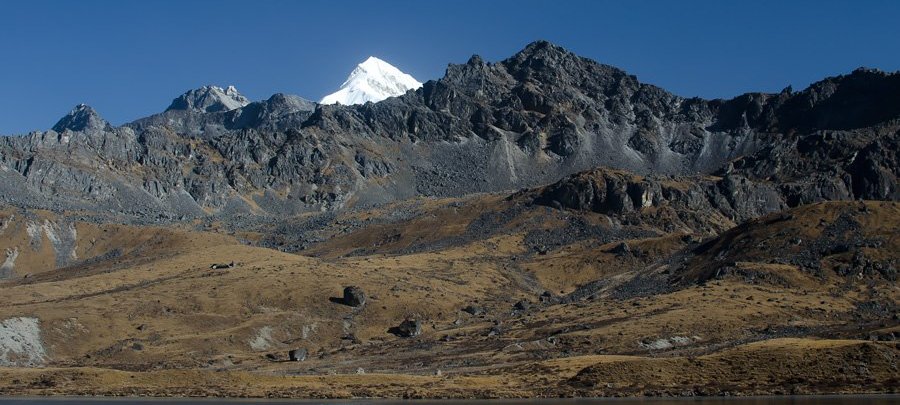
In addressing this crisis, we must look beyond "half-measures" such as modern retreat centres, which are often contradictory in their function. The great fathers of the tradition, such as Longchenpa and Jigme Lingpa, never advised lengthy retreats in social, group settings where one sits in a multi-room house with three meals a day and expectations of status. True progress toward realisation requires the solitary practitioner to meet all the challenges in the high mountains, at altitudes of 4,000 to 4,500 metres, where nature and conditions themselves become a teacher. In this pure dimension, fare away from societies, for example, the sight of a soaring eagle may correct one’s meditation, and the shimmering play of light upon a mountain stream as it threads between the snows under the morning sun may illuminate the nature of spontaneity and clarity, while low temperature at winter requires practitioner to cut through the ordinary mind. A single year of such solitary practice, fueled by the right motivation and the blessing of the lineage, can yield fruits that a lifetime in a comfortable centre cannot provide.
Ati Ling proposes a practical framework to restore this tradition by connecting Nyingma yogis with sustainable funding through an initial 7-to-10-year probationary period. This vision is grounded in a model of radical efficiency: a one-time investment of $5,000–$7,000 can establish a retreat site—whether by restoring an old hut, equipping a cave, or building a simple stone shelter—while a monthly budget of approximately $550 covers food, fuel, logistics via local shepherds, and a vital emergency medical fund.
The project is governed by a clear hierarchy: a Project Master (Rinpoche) provides the strategic vision, a Retreat Master (the most experienced practitioner) offers spiritual guidance and ensures the rigour of the participants, and a Manager handles the worldly logistics.
The standards for those entering this project are high, requiring a fusion of academic mastery and deep retreat experience. Candidates must be able to eloquently explain the Madhyamaka view and the principles of Vajrayana, demonstrating a command of texts such as the Madhyamakavatara, Madhyamakalankara, Bodhicharyavatara, the Seven Treasures of Longchenpa, as well as commentaries of Mipham Rinpoche, Jigme Lingpa and other principal masters of Nyingma School of Tibetan Buddhism. They must have completed at least one year of practice in strict retreats, in total, including a Ngondro, while committing to a minimum of 10 to 12 hours of daily meditation during their tenure with Ati Ling. Ideally, it should be practitioners who have entered the first stage of the main level of practice – Trekcho. One of the reason, why the last point is important because at winter conditions are quite harsh there and in order to withstand them one has to be familiar, at least to some extent, with the main practice.
The heart of this project is the Lion’s Cave (the "Abode of the King of Nagas"), a "pure land" where Trulshik Rinpoche spent 15 years in retreat after leaving Tibet. This sacred site, a steep four-hour climb from the nearest monastery, is steeped in miracles—from the handprint of a past master to the inexplicable fires on the cliffs witnessed by the author. It is a place of absolute seclusion where the experience of renouncing samsara becomes extremely tangible. By focusing on quality over quantity, the Ati Ling project aims to help to genuine practitioners who inspired to follow footsteps of the fathers of their lineage so the Dharma will once again flow from them like "life-giving nectar," inspiring and sustaining the next generation of practitioners across the Himalayas.
The goal of Ati Ling is quality over quantity. If successful, this model can be replicated across the Himalayas, creating a network of "Gars" (retreat communities). By producing masters of genuine realization, the project ensures that the Dharma will flow like "life-giving nectar," inspiring and sustaining the next generation of practitioners.